Historical landmark
Former Site of Ebbets Field
About this place
Discover Former Site of Ebbets Field
Former Site of Ebbets Field
Ebbets Field, once a cherished landmark in Brooklyn, New York, holds a significant place in the annals of baseball history. Serving as the home of the Brooklyn Dodgers from 1913 until their departure in 1957, the stadium was a focal point for the community and a symbol of the borough's identity.
Historical Background
The story of Ebbets Field begins with Charles Ebbets, the owner of the Brooklyn Dodgers. In 1908, Ebbets began acquiring parcels of land in the Flatbush section of Brooklyn, aiming to replace the aging wooden Washington Park with a modern, concrete-and-steel stadium. By 1911, he had assembled a 5.7-acre site, which included a garbage dump known as "Pigtown," named for the pigs that scavenged there and the pervasive stench. Construction commenced in 1912, and the stadium officially opened on April 9, 1913. (baseballhistory.org)
Architectural Features
Designed by architect Clarence Randall Van Buskirk, Ebbets Field was a testament to early 20th-century stadium architecture. The ballpark featured a marble rotunda, twelve gilded ticket windows, and a chandelier with twelve baseball bat "arms" holding twelve baseball lamps. The original seating capacity was 25,000, which was later expanded to 32,000 in 1932 to accommodate the growing fan base. (baseball-almanac.com)
Dimensions and Playing Field
Ebbets Field was known for its unique dimensions, which favored hitters. The left field line was 348 feet, center field 399 feet, and right field 297 feet. These dimensions led to high-scoring games and memorable moments, including the debut of Jackie Robinson in 1947, which marked a significant milestone in the integration of Major League Baseball. (en.wikipedia.org)
Cultural Significance
Beyond its architectural and sporting significance, Ebbets Field was a cultural hub for Brooklyn. The stadium was known for its colorful, working-class fan base, including such legendary figures as Hilda Chester and the Dodgers Sym-Phony. The park also hosted various other events and teams, including professional football games and concerts. (baseball-reference.com)
Decline and Demolition
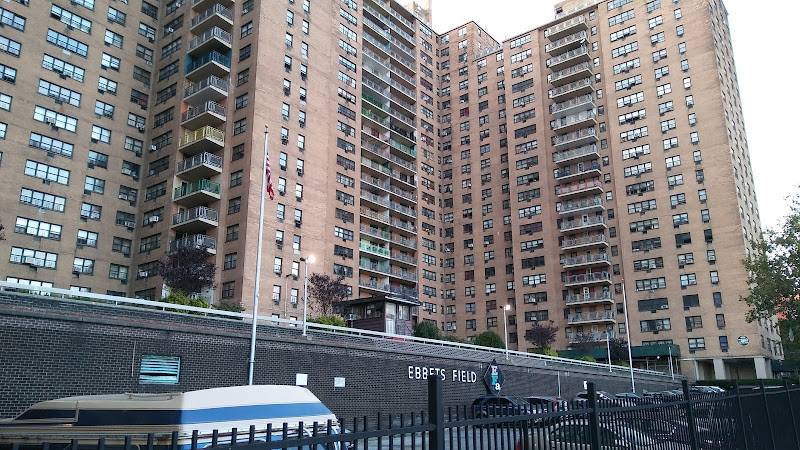
Despite its popularity, Ebbets Field faced challenges such as limited seating and parking, which contributed to the Dodgers' decision to move to Los Angeles in 1958. The stadium was demolished in 1960, and the site was redeveloped into the Ebbets Field Apartments, later renamed the Jackie Robinson Apartments in honor of the legendary player. (en.wikipedia.org)
Legacy
The legacy of Ebbets Field endures in the hearts of baseball fans and the history of the sport. The stadium's intimate atmosphere and the iconic moments that unfolded within its walls continue to be celebrated. In 2012, when the New Jersey Nets of the National Basketball Association moved to Brooklyn, they installed the Ebbets Field flagpole in front of their home arena, the Barclays Center, as a tribute to the stadium's enduring legacy. (en.wikipedia.org)
Ebbets Field remains a symbol of Brooklyn's rich cultural and sporting heritage, representing a bygone era of baseball that continues to inspire nostalgia and admiration.
Location