attractions
Museum Square (Plaza Del Museo)
About this place
Discover Museum Square (Plaza Del Museo)
Plaza del Museo, situated in Seville's historic Casco Antiguo district, is a public square that embodies the city's rich history and vibrant cultural life. Established in 1846, the square occupies the site of the former Convento Casa Grande de la Merced, a significant religious institution that once stood as a testament to Seville's architectural and spiritual heritage. The convent was founded in 1594 by the Order of the Blessed Virgin Mary of Mercy, known as La Merced, and was designed in the Andalusian Mannerist style, featuring three courtyards and a grand staircase. This architectural style, prevalent in 17th-century Spain, is characterized by its harmonious proportions and decorative elements that reflect the cultural influences of the period.
The transformation of the convent into a public square was a result of the Spanish government's Desamortización de Mendizábal in 1835, a series of secularization policies that led to the confiscation and redistribution of church properties. In 1840, the majority of the convent was demolished, and the following year, the space was repurposed into a public promenade. The design of the square was entrusted to municipal architect Balbino Marrón, with artistic direction by painter Andrés Rossi. Their vision culminated in a space that harmoniously blended urban design with natural elements, creating a serene environment for the public.
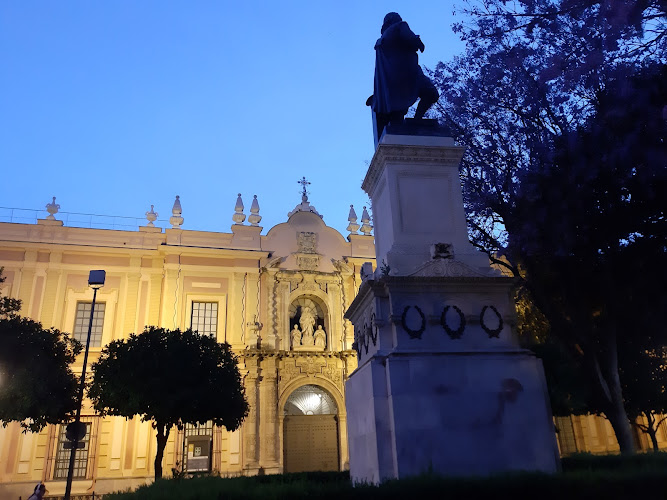
The central feature of Plaza del Museo is a roundabout that houses a monument to Bartolomé Esteban Murillo, one of Seville's most celebrated painters. Murillo's works are prominently displayed in the adjacent Museum of Fine Arts, making the square a fitting tribute to his legacy. The monument, crafted by sculptor Sabino de Medina in 1864, serves as a focal point, drawing visitors and art enthusiasts alike. Surrounding the monument, the square is adorned with well-maintained gardens, low iron railings, and benches, inviting passersby to pause and appreciate the tranquil setting.
The square's landscaping features a variety of trees that provide ample shade and contribute to its lush ambiance. Notable among these are the Ficus macrophylla, commonly known as the Moreton Bay fig, and the Magnolia grandiflora, or southern magnolia. These mature trees not only enhance the aesthetic appeal of the square but also offer a respite from the Andalusian sun, making it a favored spot for both locals and tourists seeking relaxation. The undergrowth is populated with jacarandas (Jacaranda mimosifolia), date palms (Phoenix dactylifera), and orange trees (Citrus aurantium), adding to the square's botanical diversity.
Adjacent to the square stands the Museum of Fine Arts (Museo de Bellas Artes), housed in the former convent building. Established in 1835 and officially inaugurated in 1841, the museum is one of Spain's most significant art institutions, showcasing an extensive collection of Spanish art from the medieval period to the early 20th century. The museum's holdings include masterpieces by artists such as Francisco de Zurbarán, Juan de Valdés Leal, and Bartolomé Esteban Murillo, providing insight into the rich artistic heritage of Seville and Andalusia. The museum's proximity to Plaza del Museo makes the square a focal point for art enthusiasts and those seeking a peaceful urban oasis.
Over the years, Plaza del Museo has undergone several renovations to preserve its historical and architectural integrity. In 1888, 1921, and 1945, the square was remodeled to enhance its design and functionality. These renovations included the addition of new plantings, the installation of benches, and the creation of pathways that encourage leisurely strolls. The 1945 renovation also involved the relocation of the convent's original façade to the nearby Calle Bailén, further integrating the square with the city's architectural landscape.
In addition to its architectural and botanical features, Plaza del Museo serves as a cultural hub. Every Sunday morning, the square hosts an art market where local artists display their paintings, prints, sculptures, photographs, and ceramics. This tradition, which began in 1999, attracts both artists and visitors, adding a dynamic and colorful element to the square's ambiance. The market not only supports the local art community but also fosters a sense of connection and appreciation for the arts among the public.
The square's location in the heart of Seville's Casco Antiguo district makes it an ideal starting point for exploring the city's rich history and culture. Its proximity to other notable landmarks, such as the Seville Cathedral, the Alcázar of Seville, and the Metropol Parasol, allows visitors to immerse themselves in the city's architectural and cultural heritage. Whether one is interested in art, history, or simply enjoying a leisurely stroll, Plaza del Museo offers a unique and enriching experience that captures the essence of Seville.
In conclusion, Plaza del Museo is more than just a public square; it is a testament to Seville's ability to preserve its historical roots while embracing contemporary cultural expressions. Through
Location