place of historical interest
Historic Site of Nuevo Baztán (Conjunto Histórico de Nuevo Baztán)
About this place
Discover Historic Site of Nuevo Baztán (Conjunto Histórico de Nuevo Baztán)
Nuevo Baztán, situated approximately 50 kilometers southeast of Madrid in the Community of Madrid, Spain, is a historic town renowned for its unique urban planning and architectural heritage. Founded in the early 18th century by Juan de Goyeneche, a Navarrese nobleman, the town was conceived as a model industrial and residential complex, reflecting the influence of French rationalism on Spanish urban development. (barcelo.com)
Historical Background
The origins of Nuevo Baztán trace back to 1709 when Juan de Goyeneche, inspired by the economic and social reforms of the Enlightenment, sought to establish a self-sufficient community that integrated industrial production with residential life. The town's name pays homage to Goyeneche's birthplace, the Baztán Valley in Navarre, underscoring his desire to recreate the prosperity of his homeland. (en.wikipedia.org)
Goyeneche's vision was to create a thriving industrial hub that would contribute to Spain's economic development. To achieve this, he enlisted the expertise of José Benito de Churriguera, one of the most prominent architects of the Spanish Baroque period, to design the town's layout and key structures. (es.wikipedia.org)
Urban Planning and Architecture
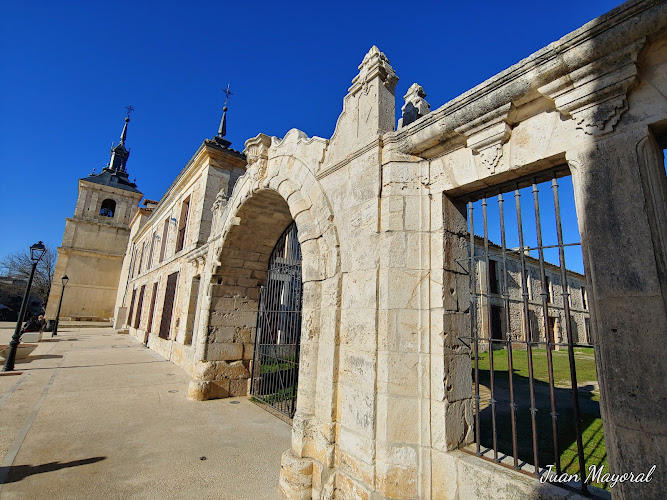
The town's design is characterized by an orthogonal grid layout, a departure from the traditional organic growth patterns of Spanish settlements. This urban plan features six blocks radiating from the central Goyeneche Palace and the Church of San Francisco Javier, creating a harmonious and functional space that facilitated both industrial activities and residential life. The centrality of the palace and church emphasized the importance of these institutions in the community's daily life. (es.wikipedia.org)
The Goyeneche Palace, constructed between 1709 and 1713, is a testament to the architectural prowess of José Benito de Churriguera. The palace's design integrates a church, reflecting the intertwined nature of religious and civic life in the town. The building's Baroque style is evident in its ornate facades, intricate detailing, and grandiose proportions, embodying the artistic and cultural aspirations of the period. (en.wikipedia.org)
Adjacent to the palace, the Church of San Francisco Javier serves as a focal point for the community, dedicated to Saint Francis Xavier, a Jesuit missionary and co-founder of the Society of Jesus. The church's design complements the palace, maintaining the cohesive architectural aesthetic of the town. The dedication to Saint Francis Xavier reflects the Navarrese origins of the Goyeneche family, highlighting the cultural and religious influences that shaped the town's identity. (en.wikipedia.org)
The town's urban layout is complemented by two adjacent squares: the Plaza de la Iglesia and the Plaza del Mercado. These public spaces were designed to facilitate social interaction and commerce, serving as venues for markets, festivals, and communal gatherings. The plazas' strategic placement around the palace and church underscores their significance in the town's social and economic life. (es.wikipedia.org)
Industrial Activities and Economic Development
Central to Nuevo Baztán's establishment was its industrial component, particularly the glass production facility. The town was envisioned as a center for manufacturing luxury goods, with the glass factory being a primary industry. However, the glass production faced challenges due to difficulties in obtaining the necessary fuel supplies locally, leading to the industry's decline by the end of the 18th century. Despite this setback, the town's design and infrastructure laid the groundwork for future industrial endeavors in Spain. (en.wikipedia.org)
Cultural and Social Life
The town's design facilitated a close-knit community, with residential areas, industrial facilities, and public spaces all within proximity. This integration fostered a sense of unity and purpose among the inhabitants, who were often artisans and workers employed in the factories.
Location