hiking area
Hernán-Valle Railway Station (Estación de ferrocarril de Hernán-Valle)
About this place
Discover Hernán-Valle Railway Station (Estación de ferrocarril de Hernán-Valle)
Hernán-Valle Railway Station
Hernán-Valle Railway Station, located in the municipality of Guadix in the province of Granada, Spain, was a significant hub in the Murcia-Granada railway network. Its establishment in 1906 marked a pivotal moment in the region's transportation history, influencing economic development, architectural trends, and cultural dynamics.
Historical Context
The early 20th century was a period of substantial infrastructural development in Spain, particularly in the realm of railway expansion. The Murcia-Granada line was conceived to enhance connectivity between the southeastern and central parts of the country, facilitating the movement of goods and passengers. The segment connecting Guadix to Gor was a critical component of this vision, leading to the inception of Hernán-Valle Railway Station in 1906.
Construction and Design
The station was constructed by the Granada Railway Company Limited, a British-owned entity, reflecting the international investment in Spain's railway infrastructure during that era. The architectural design of the station was emblematic of early 20th-century Spanish railway stations, characterized by a central two-story building flanked by single-story wings. The façade featured a rounded pediment, a common architectural element that added a classical touch to the structure. This design not only served functional purposes but also contributed to the aesthetic appeal of the station.
Operational Era
Upon its inauguration, Hernán-Valle Railway Station became a vital node in the Murcia-Granada railway line. It facilitated the efficient movement of passengers and freight, playing a crucial role in the economic development of the region. The station's strategic location near the nudo ferroviario de Guadix (Guadix railway junction) further enhanced its significance, as it served as a conduit for various railway lines converging in the area.
Transition of Ownership
In 1917, the station's operations were transferred to the Compañía de los Caminos de Hierro de Granada (Baza-Guadix), a Spanish railway company. This change marked a shift in the station's administrative oversight, aligning it more closely with national interests. The nationalization of Spanish railways in 1941 integrated the station into the Red Nacional de los Ferrocarriles Españoles (RENFE), the newly established national railway network. This integration standardized operations and facilitated the modernization of services, including the gradual replacement of steam locomotives with diesel engines.
Community Development
The presence of the station had a profound impact on the local community. A settlement developed around the station, which, by 1950, had a population of 1,011 residents. This growth was indicative of the station's role in fostering economic opportunities and providing employment, thereby contributing to the demographic expansion of the area. The community's development was closely tied to the station's operations, with many residents likely employed in various capacities related to the railway.
Closure and Decline
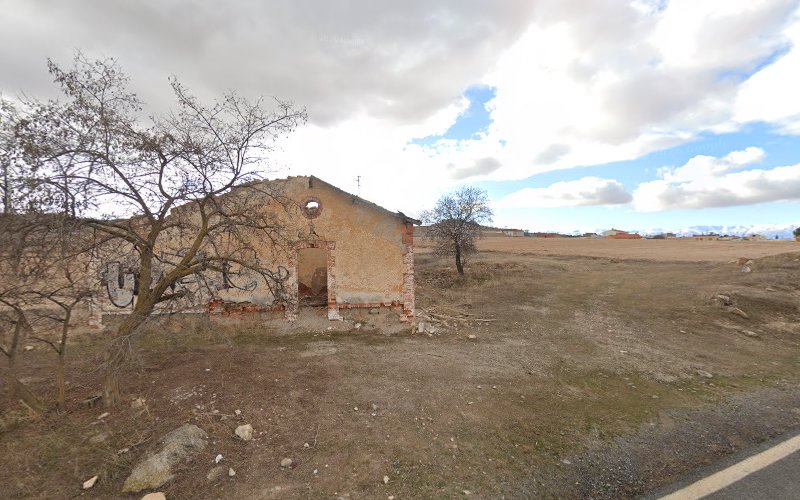
In 1984, the Spanish Ministry of Transport and RENFE decided to close several railway lines deemed economically unviable, including the Almanzora line, which encompassed the segment between Guadix and Almendricos. Consequently, on December 31, 1984, the last train passed through Hernán-Valle Railway Station, leading to its immediate closure. The cessation of services resulted in the abandonment of the station and its facilities, which have since fallen into a state of semi-ruin. This decline reflects the broader challenges faced by Spain's railway infrastructure during the late 20th century, including competition from other modes of transportation and changing economic priorities.
Architectural Significance
The architectural design of Hernán-Valle Railway Station was typical of early 20th-century Spanish railway stations, featuring a central two-story building flanked by single-story wings. The façade's rounded pediment added a classical element to the structure, enhancing its aesthetic appeal. The station was equipped with three platforms—one side platform and two central platforms—serving five tracks, facilitating efficient passenger and freight movement. This design not only served functional purposes but also contributed to the architectural heritage of the region.
Cultural and Economic Impact
The station
Location