Shinto shrine
Misaki Inari Shrine
About this place
Discover Misaki Inari Shrine
Misaki Inari Shrine
Misaki Inari Shrine, nestled in the heart of Chiyoda City, Tokyo, stands as a testament to Japan's rich Shinto heritage and the enduring reverence for Inari, the deity of agriculture, prosperity, and protection. Its history, architectural features, cultural significance, and the experiences it offers to visitors weave a narrative that reflects the evolving tapestry of Tokyo itself.
Historical Background
The origins of Misaki Inari Shrine trace back to a period before the late 12th century, during the late Heian period. Initially, it was established as Misaki Shrine, serving as the guardian deity for the residents of Misaki Village in the Toshima District. The shrine's original location was on Kanda Mountain (Surugadai), a site that offered both spiritual significance and a commanding view of the surrounding landscape. (goshuin.net)
With the advent of the Edo period and the subsequent urbanization of Tokyo, the shrine underwent several relocations. Each move was necessitated by the city's expansion and the need to accommodate new developments. Despite these changes, the shrine's dedication to Inari remained steadfast, symbolizing the community's enduring connection to their spiritual roots amidst the evolving urban landscape. (goshuin.net)
Architectural Features
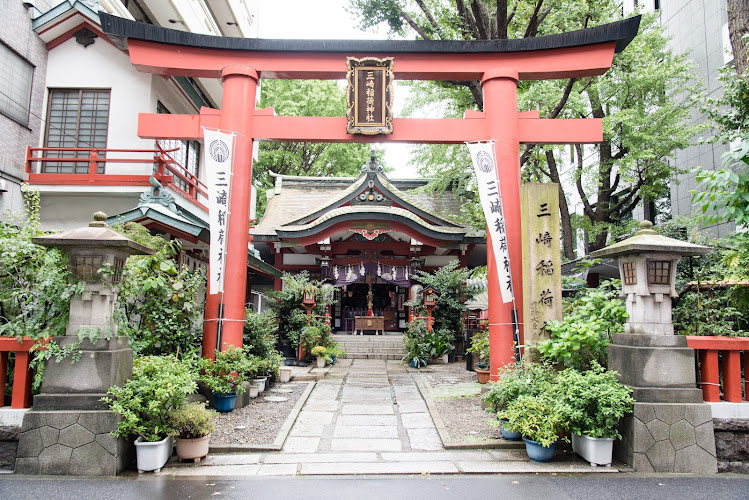
The shrine's architecture embodies traditional Shinto design elements, characterized by simplicity and harmony with nature. The main hall (honden) is constructed with white stucco walls and red-lacquered wooden pillars, a common aesthetic for Inari shrines. This design not only reflects the shrine's dedication to Inari but also aligns with the architectural style prevalent among Inari shrines throughout Japan. (en.wikipedia.org)
The shrine's grounds are modest yet thoughtfully arranged. Visitors are greeted by a torii gate, marking the transition from the mundane to the sacred. The approach is lined with stone lanterns and lush greenery, creating a serene pathway that leads to the main hall. The presence of tall trees provides shade and a sense of tranquility, offering a peaceful retreat from the bustling city life. (shrine.iki-kiru.com)
Enshrined Deities and Blessings
At the heart of Misaki Inari Shrine are the deities enshrined within its main hall. The principal deity is Uka no Mitama no Kami, also known as Inari, the goddess of grains and agriculture. Inari is revered for blessings such as abundant harvests, successful business ventures, household safety, and travel safety. (goshuin.net)
In addition to Inari, the shrine enshrines other deities:
- Susanoo no Mikoto: The storm god, associated with protection and purification.
- Omoikane no Kami: The deity of wisdom and intelligence.
- Ōmononushi no Kami: The great deity of agriculture and medicine.
These deities collectively offer a range of blessings, including protection from misfortune, wisdom, and health. (goshuin.net)
Cultural Significance
Misaki Inari Shrine holds a special place in Tokyo's cultural and spiritual landscape. Its association with Inari, a deity widely venerated across Japan, underscores the shrine's role in the broader Shinto tradition. Inari shrines are typically constructed with white stucco walls and red-lacquered woodwork, and their entrances are marked by vermilion torii gates, creating a distinctive and recognizable aesthetic. (en.wikipedia.org)
The shrine's location near Suidobashi Station places it at the crossroads of Tokyo's historical and modern districts. This proximity allows visitors to experience a blend of traditional spirituality amidst the city's dynamic urban environment. The shrine's modest size and serene atmosphere offer a peaceful retreat, providing a space for reflection and connection to Japan's spiritual heritage. (wanderlog.com)
Visitor Experience
Visitors to Misaki Inari Shrine often commend its well-maintained grounds and tranquil ambiance. The shrine's proximity to Suidobashi Station makes it easily accessible for those exploring Tokyo's cultural and historical sites. Despite its modest size, the shrine offers a peaceful retreat from the bustling city life. The surrounding foliage, especially during the autumn season, adds to
Location