mosque
Khatam Al Anbia Mosque
About this place
Discover Khatam Al Anbia Mosque
Khatam Al Anbia Mosque
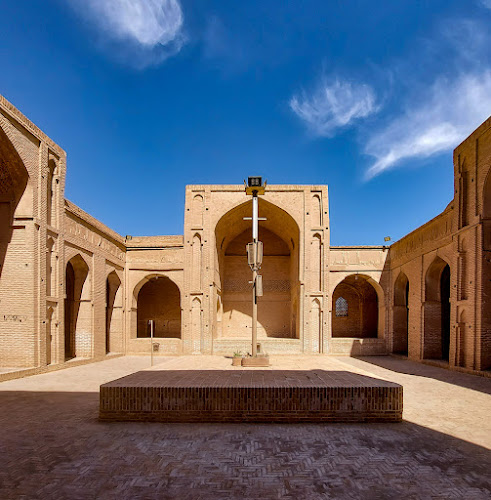
The Khatam Al Anbia Mosque, situated in Zavareh, Isfahan Province, Iran, stands as a testament to the architectural ingenuity and cultural richness of the Seljuk period. Its construction, spanning from 1135 to 1156 CE, marks it as one of the earliest examples of the four-iwan mosque design, a layout that would become a hallmark of Persian mosque architecture. (en.wikipedia.org)
Historical Context
Zavareh, located approximately 15 kilometers north of Ardestan, is a city with a rich history dating back to the Sassanian era. The region was known for its Sassanian fire temple and served as a significant trade center during the Seljuk period. The city's name is derived from Zavara, the brother of Rostam, a mythical hero in Persian literature. (en.wikipedia.org)
The mosque was commissioned by Abu Tahir Husayn ibn Ghali ibn Ahmad, a notable figure of the time. Inscriptions found on the courtyard façade date the mosque's construction to 1135 CE, with additional work completed by 1156 CE. This timeline places the mosque's construction within the mid-12th century, a period of significant architectural development in Iran. (en.wikipedia.org)
Architectural Features
The mosque's design is a prime example of Seljuk architecture, characterized by its four-iwan layout. This design includes a central dome chamber on the qibla side, surrounded by four iwans that open onto a central courtyard. This configuration not only enhances the aesthetic appeal but also improves acoustics and air circulation within the mosque. (en.wikipedia.org)
The central dome is supported by muqarnas squinches, a hallmark of Islamic architecture that allows for the transition from a square base to a circular dome. The interior of the dome features intricate brickwork, with intersecting patterns creating cross motifs, showcasing the craftsmanship of the era. (en.wikipedia.org)
The mosque's interior is adorned with floral Qur’anic Kufic script and vine motifs, reflecting the artistic and cultural influences of the time. Despite the passage of centuries, these decorations have been preserved, offering a glimpse into the rich cultural heritage of the period. (en.wikipedia.org)
Restoration Efforts
Recognizing the historical and cultural significance of the mosque, restoration efforts were undertaken in 2022. These efforts focused on strengthening the structure and repairing the rooftop and flooring, ensuring the mosque's preservation for future generations. The restoration was completed with a budget of 2.5 billion rials (approximately $8,400), reflecting the community's commitment to preserving this architectural gem. (en.wikipedia.org)
Cultural Significance
The Khatam Al Anbia Mosque holds a prominent place in the cultural and religious landscape of Zavareh. As an active place of worship, it continues to serve the spiritual needs of the community. The mosque's architectural design and decorative elements reflect the artistic and cultural achievements of the Seljuk period, offering valuable insights into the era's aesthetic sensibilities. (en.wikipedia.org)
Visitor Information
Visitors to Zavareh can explore the mosque's historical significance and architectural beauty. The mosque remains an active place of worship, reflecting the enduring spiritual and cultural importance of the site. While specific visiting hours are not detailed in the available sources, it is advisable to contact local authorities or the mosque administration for the most current information before planning a visit.
In addition to the mosque, Zavareh offers other historical sites, including the Pa Minar Mosque, known for its ancient minaret dating back to 1068–1069 CE, and the Green Dome of Zavareh, the tomb of Abunasr Ahmad Ali Zavare'i, a mystic from the early sixth century. (en.wikipedia.org)
Exploring these sites provides a comprehensive understanding of the region's rich Islamic heritage and
Location