Park and Garden
Epping Forest NW
About this place
Discover Epping Forest NW
Epping Forest NW
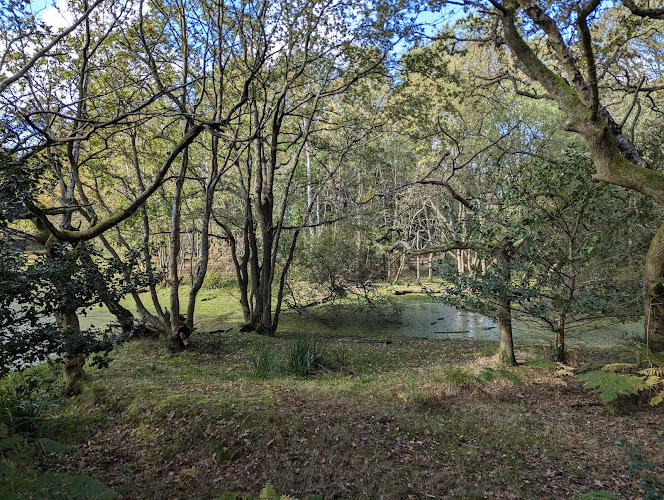
Epping Forest is a historic and ecologically significant ancient woodland that stretches approximately 2,400 hectares, covering about 12 miles from Manor Park in East London to just north of Epping in Essex. Designated as a Site of Special Scientific Interest and a Special Area of Conservation, it holds national and international importance for conservation. (visitessex.com)
Geographical Features
The forest occupies a ridge of higher ground, the Epping Forest Ridge, set between the valleys of the Rivers Lea and Roding. These valleys were formed by arms of the Scandinavian ice sheet during the last glacial period, around 18,000 BC. The ridge consists of boulder clay topped with loam, while towards its southern end, it is overlain with glacial gravel. The highest points are near Ambresbury Banks to the south of Epping, which is 111 metres (384 feet) above sea level, while Pole Hill near Chingford reaches 91 metres (299 feet). On the western edge of the ridge, High Beach at a similar height, is an expanse of gravel and Bagshot sand, thought to have been deposited by an unknown river which flowed northwards from the Weald of Kent before the creation of the Thames Valley. (en.wikipedia.org)
Historical Significance
Epping Forest has a rich history, with evidence of human activity dating back thousands of years. The forest has been a source of timber, hunting grounds, and a place for recreation. Queen Victoria dedicated it "for the enjoyment of my people for ever" under an act passed by Parliament in 1878, ensuring its preservation for public use. (landscapebritain.co.uk)
Ecological Importance
The forest is home to a diverse range of flora and fauna, including approximately 1,500 deer. These deer were originally introduced for hunting purposes but now provide a wonderful spectacle for visitors, especially on Sunday mornings between November and January. (landscapebritain.co.uk) The forest's varied habitats support numerous species of birds, mammals, and insects, making it a vital area for biodiversity.
Recreational Activities
Epping Forest offers a wide array of activities for visitors of all ages and interests. Walking and cycling are popular pursuits, with numerous trails winding through the woodland. Horse riding is also permitted on designated paths. Sports enthusiasts can enjoy football, golf, and cricket facilities within the forest. The forest hosts family-friendly events throughout the year, catering to a variety of interests and age groups. (visitessex.com)
Visitor Centres
There are four visitor centres within Epping Forest that provide information and guidance on exploring this extensive green space. The Epping Forest Visitor Centre, located in High Beach, offers insights into the forest's history and ecology. The centre is open from Friday to Sunday and on Bank Holiday Mondays, from 10 am to 4 pm. ({{LINK0}}) The Queen Elizabeth's Hunting Lodge, a timber-framed hunting grandstand built for Henry VIII, is also located within the forest and offers historical exhibits and panoramic views of the surrounding area. ({{LINK1}})
Conservation Efforts
Epping Forest is managed by the City of London Corporation, which works to balance conservation with public access. The forest is designated as a Site of Special Scientific Interest and a Special Area of Conservation, reflecting its ecological significance. Efforts are continually made to preserve its biodiversity and historical features while accommodating the millions of visitors who enjoy its amenities each year. (visitessex.com)
Access and Transportation
Epping Forest is easily accessible from central London and surrounding areas. The town of Loughton, located on the western edge of the forest, is served by Loughton and Debden stations on the Central line of the London Underground, providing direct access to the forest. Bus routes operated by Stagecoach London connect Loughton with nearby towns and cities, including Buckhurst Hill, Chingford, Debden, Ilford, Walthamstow, and Woodford. The M11 motorway, linking Cambridge to London, is accessible from Loughton's eastern boundary at junction 5 (south). (en.wikipedia.org)
**Cultural Sign
Location