Historical landmark
Remains of St Thomas' Church
About this place
Discover Remains of St Thomas' Church
Remains of St Thomas' Church
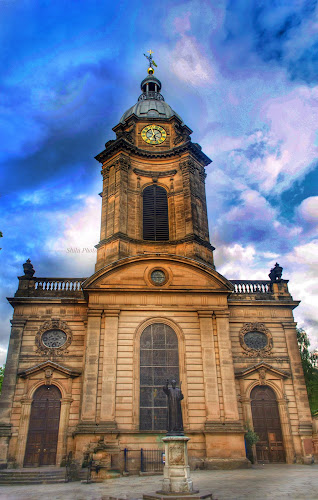
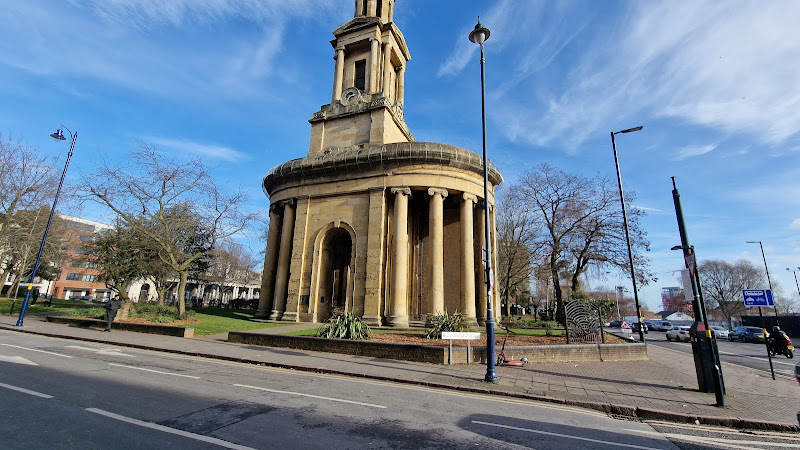
The surviving tower and portico of St Thomas' Church, located on Granville Street in Birmingham, stand as poignant remnants of a once-grand neoclassical structure. Designed by architect Thomas Rickman, the church was consecrated on 29 October 1829 and initially seated 2,600 people. During the Chartist riots of 1839, the churchyard's railings were repurposed as pikes by protesters. In 1893, under architect Frank Barlow Osborn, the church underwent significant restoration, including the removal of high-back pews and the renovation of the organ by Walter James Bird. Tragically, on the night of 11 December 1940, during World War II, German bombs destroyed all but the tower and classical west portico. The parish was subsequently united with Immanuel Church, which had closed in 1939. The remaining portico and tower have been preserved and are now part of St Thomas' Peace Garden. (en.wikipedia.org)
The church was designed by architect Thomas Rickman, a prominent figure in the neoclassical architectural movement. Rickman was known for his work on several significant churches in Birmingham, and St Thomas' Church was among his notable contributions. The church's design featured a classical west portico and a tower, elements that have survived the destruction and now form part of the Peace Garden. (en.wikipedia.org)
The church's consecration on 29 October 1829 marked a significant event in Birmingham's religious history. At the time, it was one of the largest churches in the city, seating 2,600 people. This capacity underscored the growing population and the need for larger places of worship in the area. (en.wikipedia.org)
The church's involvement in the Chartist riots of 1839 highlights its place in Birmingham's social and political history. During the riots, protesters took railings from around the churchyard to use as pikes, indicating the church's proximity to significant historical events. (en.wikipedia.org)
The restoration in 1893 under architect Frank Barlow Osborn was a significant event in the church's history. The removal of the old high-back pews and pew platforms, along with the cleaning and renovation of the church, reflected a desire to modernize and restore the church to its former glory. The organ's restoration by Walter James Bird was also a notable aspect of this renovation, ensuring that the church's musical heritage was preserved. (en.wikipedia.org)
The destruction of the church during World War II was a tragic event. The bombing on the night of 11 December 1940 led to the loss of the church building, leaving only the tower and portico standing. This event marked a significant moment in Birmingham's history, as the city faced the challenges and devastations of the war. (en.wikipedia.org)
The preservation of the remaining portico and tower as part of St Thomas' Peace Garden serves as a testament to the church's historical significance. The Peace Garden provides a space for reflection and remembrance, allowing visitors to connect with the city's rich history and the church's legacy. (en.wikipedia.org)
Today, the remains of St Thomas' Church stand as a Grade II listed structure, recognized for its historical and architectural importance. The site continues to attract visitors interested in Birmingham's history and the church's role in the city's development. (wikimapia.org)
The church's history reflects the broader trends in Birmingham during the 19th and early 20th centuries, including urban expansion, social movements, and the impacts of global events like World War II. The remains of St Thomas' Church serve as a poignant reminder of the city's past and the resilience of its community.
Location